Article
New Industrial Estate Standards Apply 2026, These Are the Implications for Investors and Tenants
14 Januari 2026
14 Januari 2026
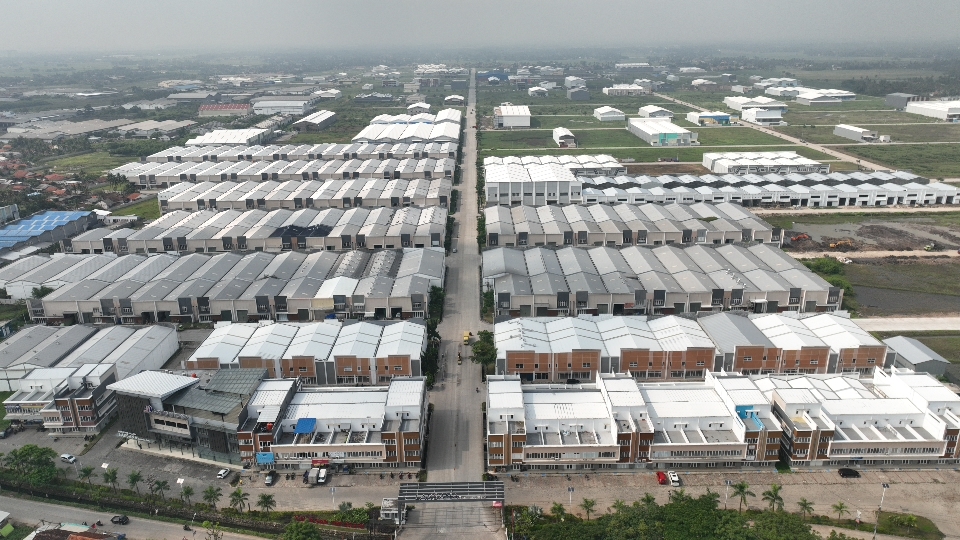
The implementation of industrial estate standards and accreditation in 2026 confirms the shift towards more quality, integrated, and competitive management, so that areas such as Laksana Business Park are increasingly ready to become the main choice of investors and tenants in the future.
JAKARTA, Agung Intiland News – Entering 2026, the management of national industrial estates has entered a new phase with the enactment of industrial estate standards and accreditation systems. This policy is a strategic step by the government to improve the quality of regional management, strengthen investment competitiveness, and ensure the sustainability of industrial activities in Indonesia.
The new standard emphasizes that industrial estates are no longer judged only by the availability of land and basic infrastructure, but also by the quality of management, support services, compliance with regulations, and the readiness of the area to support modern industrial activities.
Encouraging More Competitive Industrial Estate
For investors, the application of this standard is considered to provide more certainty in choosing a business location. Accredited industrial estates are expected to have a more organized management system, integrated services, and operational certainty in the long term.
"The standardization of industrial estates is a positive signal for investors. With clear parameters, investors can assess the readiness of the area objectively, not only in terms of price or location," said an industrial property observer in Jakarta.
In addition, this new standard also encourages area managers to improve the quality of services, ranging from area management, security, environmental management, to logistics connectivity.
Impact on Tenants and Industrial Activities
For tenants, the existence of industrial estates that meet standards is expected to be able to support operational efficiency. Areas with good management are considered to be able to minimize non-technical obstacles, such as internal licensing, utilities, and environmental management issues.
Tenants in the modern manufacturing, logistics, and warehousing sectors are the groups that feel the most impact. Industrial activities that increasingly rely on speed, precision, and sustainability require regions that are able to provide a comprehensive supporting ecosystem.
The implementation of standards also encourages industrial estates to be more adaptive to tenant needs, including in the provision of supporting facilities, regional traffic regulation, and infrastructure readiness for technology-based and automation-based industries.
Area Manager's Perspective
The management of Laksana Business Park assesses the implementation of industrial estate standards in 2026 as a momentum to strengthen the region's competitiveness in a sustainable manner. According to him, industrial estates in the future must be able to offer added value that is more than just a business space.
"Industrial estate standards are a reminder that regional development is not only a matter of physicality, but also the quality of management and services. A well-managed area will provide operational comfort for tenants while increasing investor confidence," said the management representative of Laksana Business Park.
He added that industrial estates that have an integrated management system will be better prepared to face industrial dynamics, including changes in market needs and technological developments.
Answering Future Industry Challenges
In the midst of competition in industrial estates at the regional level of Southeast Asia, regional standards and accreditation are important instruments to maintain Indonesia's competitiveness. Industrial estates are required not only to be able to attract investment, but also to ensure operational sustainability and long-term economic contribution.
In the future, industrial estates are expected to transform into centers of economic activity that are efficient, environmentally friendly, and integrated with supporting ecosystems, including logistics and human resources.
With the enactment of the new standard in 2026, industrial estates that are adaptive and ready to transform are predicted to be the main choice of investors and tenants in developing their businesses in Indonesia. (JP)
DisclaimerThis article is part of Agung Intiland's corporate communication and is compiled for information and public education purposes related to the development of the industrial estate ecosystem.