Article
From MSMEs to Large Companies: Why Are Warehouse Needs Changing as Businesses Grow?
4 September 2026
4 September 2026
As the business grows, the need for warehouses has changed from just a storage place to an operational facility that requires space, access, infrastructure, and an area environment that can support the company's growth.
Laksana Business Park, 4 September 2026
Business Grows, Space Needs Change
Every business has a different starting point.
Some start from home. Some use small shophouses. Some have their own production facilities or warehouses.
But one thing is usually the same:
As businesses grow, the need for space changes.
There are more products, stocks are increasing, the number of employees is increasing, and distribution activities are becoming more complex.
Space that used to be enough to run a business is finally starting to feel limited.
It is at this stage that companies need to start rethinking their warehouse needs.
Early Stage: Warehouses Only to Store Stock
In the early stages of a business, warehouse needs are usually still simple.
Business actors may only need space to store raw materials or finished products.
Activity in and out of goods is not too high so that small warehouses can still meet needs.
However, these conditions can change quickly as sales increase.
When Businesses Start Needing Systems
The growth in the volume of goods brings new problems.
Stock is increasing.
The types of products are increasingly diverse.
The frequency of delivery increases.
If previously goods could be recorded simply, at this stage companies begin to need a more structured management system.
Warehouses are no longer just a place to store goods, but are starting to become part of business processes.
Spatial layout, the flow of goods, the loading and unloading area, and the recording system are becoming increasingly important.
Next Stage: Warehouse Becomes Part of Operations
As a company evolves into a distributor, manufacturer, or company with a wider distribution network, warehouse functions become increasingly complex.
Warehouses can be a place to receive raw materials, storage, packaging, quality control, and delivery.
A small mistake in the warehouse can have an impact on the production and distribution process.
Therefore, the need for more adequate facilities usually begins to arise.
Growing Companies Need More Than Just Space
At some stage, companies don't just need warehouses.
They may need administrative offices, production areas, space for customers, loading and unloading areas, as well as other supporting facilities.
This means that the company's needs have evolved from simply "finding a place to store things" to "finding an environment to run a business."
This change is what makes industrial estates even more relevant for developing companies.
Why Do Companies Start Choosing Industrial Estates?
Industrial estates provide an environment designed to support corporate activities.
For business actors, the existence of infrastructure, utilities, security, area access, and integrated management can help create a more organized operational environment.
In addition, companies can also be in a business ecosystem that allows activities between companies to be interconnected.
Thus, industrial estates not only provide space, but also an environment to run a business.
Tangerang Becomes One of the Important Areas for Industrial Activities
Tangerang has a strategic position in the economic network of Greater Jakarta.
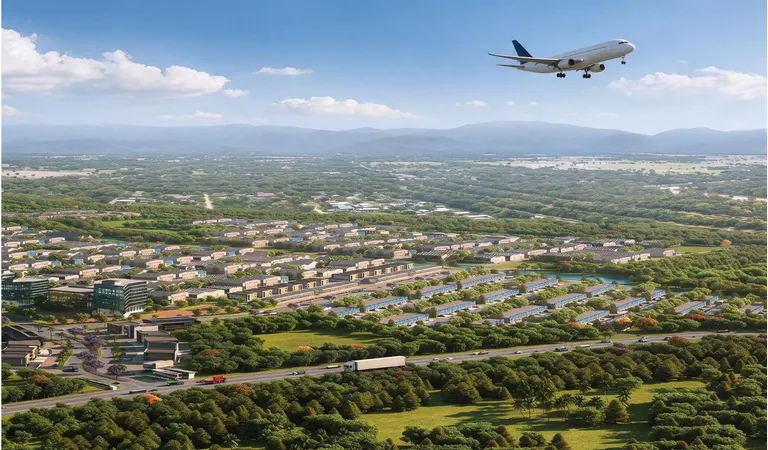
Its proximity to Jakarta, Soekarno-Hatta Airport, and various transportation networks make this area attractive for industrial, trade, and warehousing activities.
For companies that need connectivity with the Greater Jakarta market as well as access to transportation networks, a location in Tangerang can be one of the considerations.
Laksana Business Park Follows Growing Business Needs
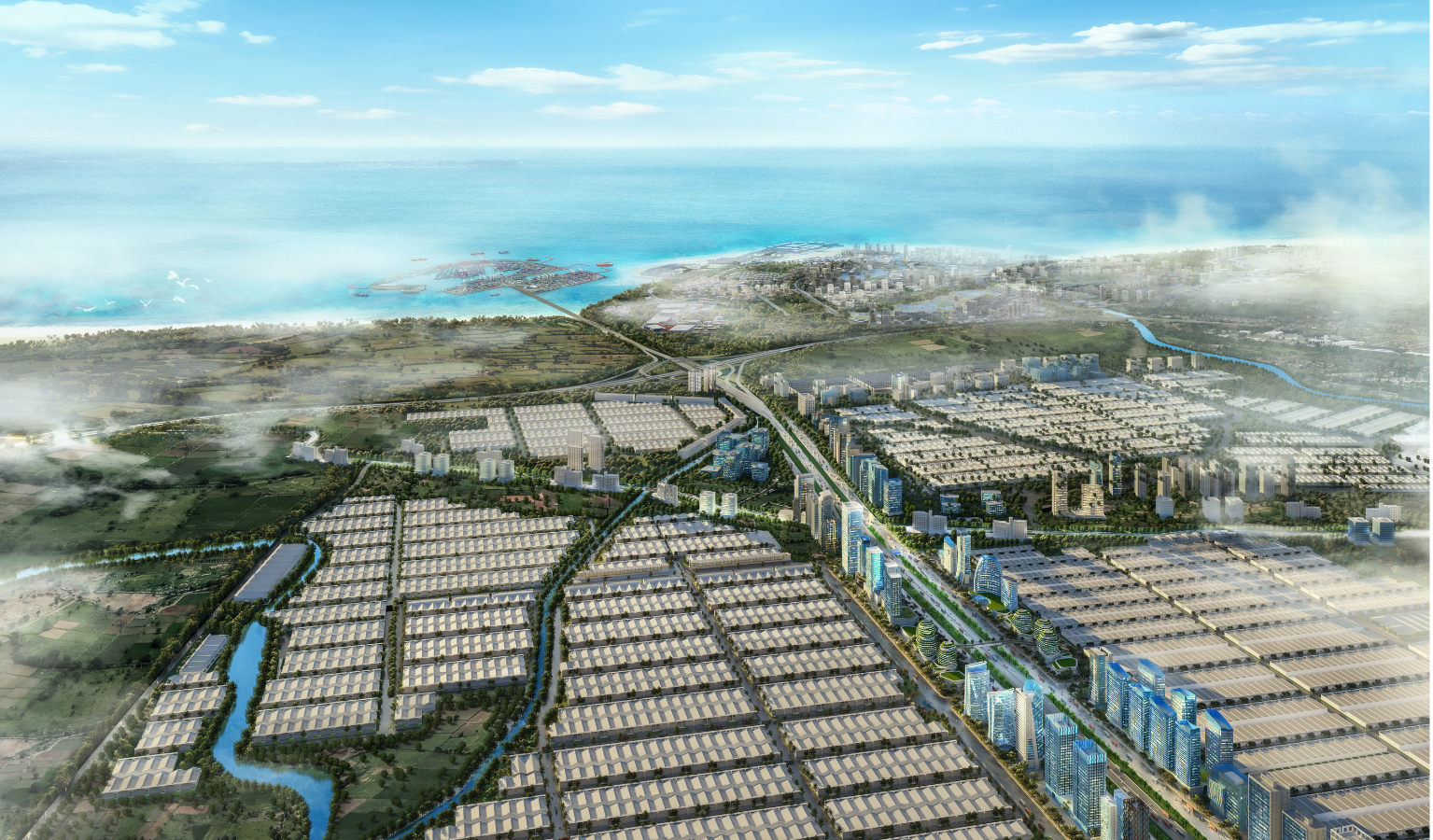
Laksana Business Park is located in Tangerang and is developed as an industrial and warehousing area that supports the company's operational needs.
This area already has an Industrial Estate Business License (IUKI).
In terms of connectivity, Laksana Business Park is about 20 minutes from Soekarno-Hatta Airport, with travel times that can change according to traffic conditions and travel routes.
This position can be a consideration for companies that need access to the airport and the economic network of Greater Jakarta.
When Warehouses, Offices, and Business Premises Need to Be in One Location
Not all business actors need industrial facilities on a large scale.
Some require a more practical concept to carry out several activities at once.
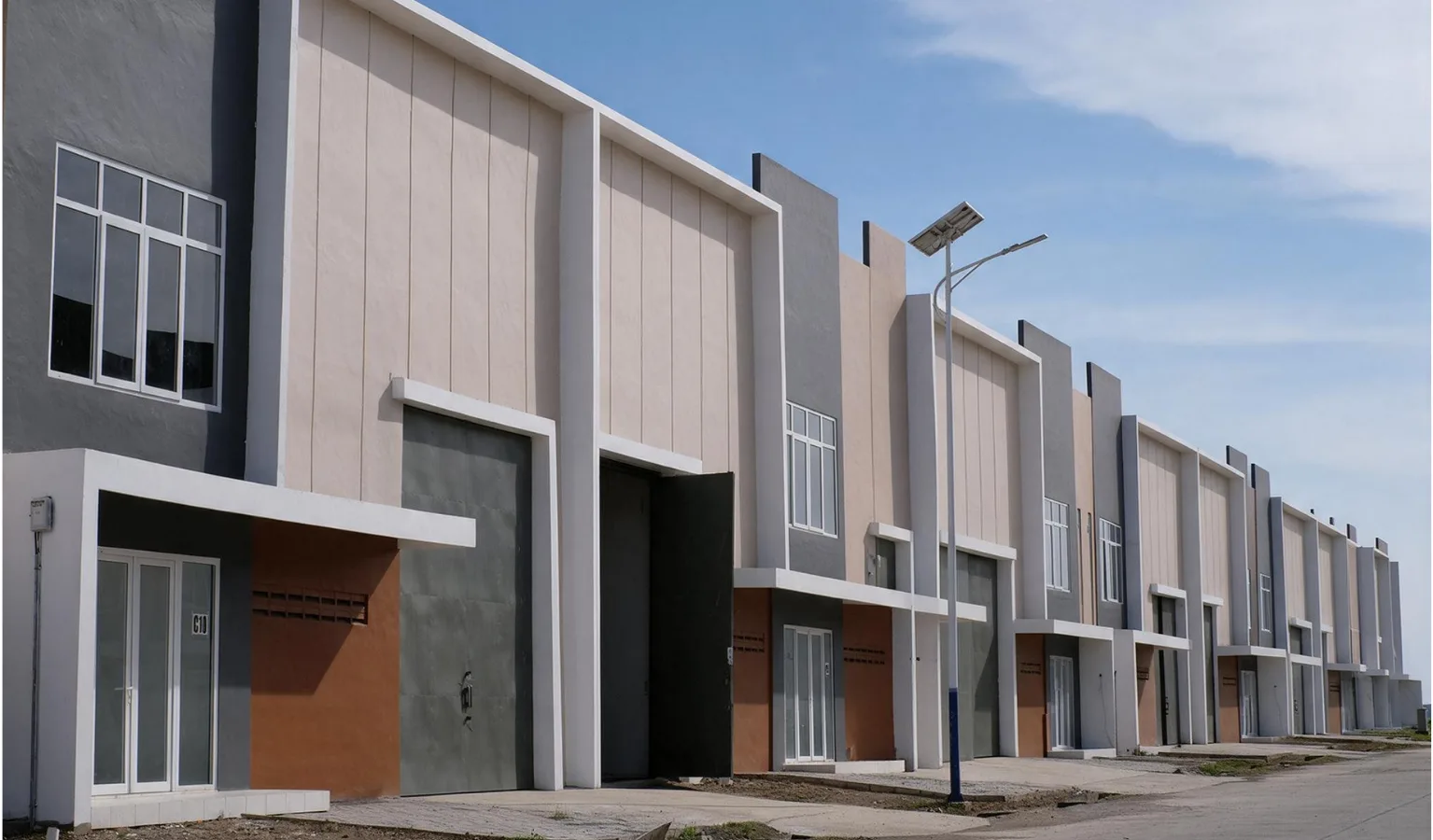
For these needs, Laksana Business Park has Luxima, a 4-in-1 concept that combines warehouses, offices, residences, and business areas in one building.
Concepts like this provide an alternative for business actors who want to reduce the complexity of moving from one location to another to carry out business activities.
Don't Wait for the Warehouse to Really Be Unable to Accommodate Business
One of the mistakes that often occurs is that new companies are looking for a new location when the old warehouse is really not able to accommodate activities.
In fact, moving takes time.
Companies need to conduct surveys, calculate needs, consider costs, prepare facilities, and move goods and operations.
Therefore, planning should be done before capacity becomes an issue.
The Right Warehouse Following the Business Growth Stage
There is no one type of warehouse that is suitable for all companies.
A newly growing business may need a simple space.
Distributors need greater access and storage capacity.
Manufacturing needs facilities that are able to support the production process.
Meanwhile, companies with high logistics activities need warehouses that are integrated with distribution systems.
This means that the need for warehouses must follow the company's growth stage.
From storage space to growth infrastructure
Ultimately, the development of the warehouse reflects the development of the business itself.
When a business is small, a warehouse may only be considered a place to store goods.
As the company expanded, the warehouse turned into a part of operations.
And as companies get bigger, location, infrastructure, access, and the region's ecosystem become part of the business strategy.
Therefore, choosing a warehouse is not just a decision about space.
It is a decision regarding how prepared the company is for the next stage of growth.
Conclusion
Business growth almost always brings changes to the needs of space.
From a simple warehouse, the company can expand to a larger, more organized, and integrated facility with production and distribution activities.
Therefore, companies need to start thinking about warehouse needs not only based on today's conditions, but also based on the direction of business growth.
Because a growing business needs a space that is able to grow with it. (JP)
FAQ
When do businesses need a larger warehouse?Businesses typically start to need larger warehouses when stock volumes increase, storage space is no longer sufficient, and loading and unloading or distribution activities begin to become more complex.
Do MSMEs need industrial warehouses?No All MSMEs need industrial warehouses. But as production, storage, or distribution volumes increase, more professional warehouse facilities can start to become a necessity.
Why do companies choose industrial estates?Areas Industries can provide a more integrated environment with infrastructure, utilities, security, access, and area management support.
What are the advantages of having a warehouse and office in one location?Combining warehouses and offices can help reduce displacement between locations and make coordinating business activities more practical.
What is Luxima 4-in-1?Luxima is a property concept in Laksana Business Park that combines the functions of warehouses, offices, residences, and business areas in one building.